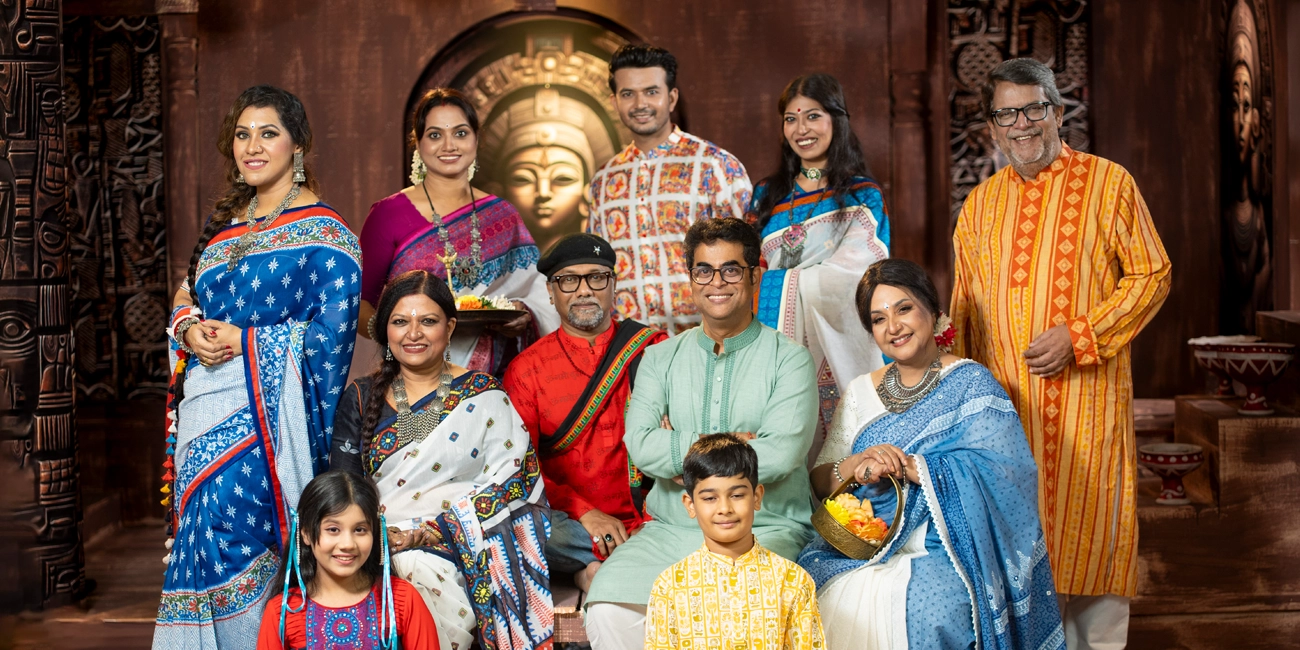
Durga Puja is not just a festival—it is a celebration of culture, tradition, family, and personal style. And for many Bengali women, choosing the right saree is an important part of getting ready for the festivities.
But with so many options available—from traditional Tant and Jamdani to silk, organza and contemporary designer sarees—how do you decide which one is right for you?
The answer depends on more than just colour or design.
The perfect Durga Puja saree should match the occasion, complement your personal style, feel comfortable enough for a long day of celebrations, and most importantly, make you feel confident.
Here is a practical guide to choosing the right saree for your Puja look.
1. Start by Thinking About Where You Will Wear It
Before choosing a saree, think about your Puja plans.
Will you be attending Anjali in the morning? Visiting pandals with family and friends? Going to an evening cultural programme? Or dressing up for Ashtami or Dashami?
Different occasions call for different levels of formality.
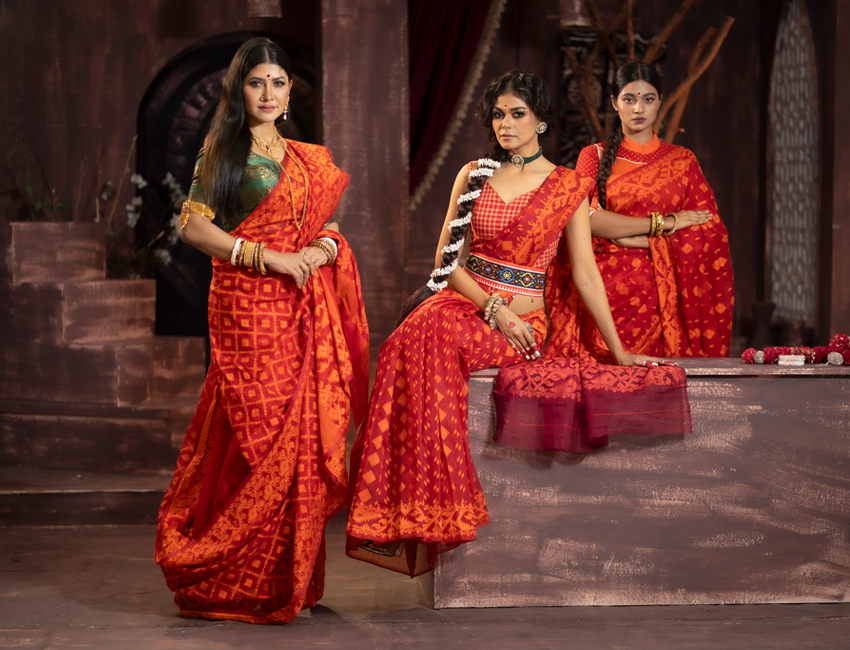
For daytime rituals and pandal visits, lightweight and breathable sarees such as Tant or cotton-based weaves can be comfortable choices. For evening celebrations, family gatherings or more formal occasions, silk, Jamdani, organza and other dressier fabrics can create a more elevated look.
So instead of asking, “Which saree is trending?”, ask:
“What kind of Puja day am I dressing for?”
That simple question can make your choice much easier.
2. Choose the Fabric According to Comfort
A beautiful saree is only a good choice if you can actually enjoy wearing it.
Durga Puja often involves long hours—walking between pandals, meeting family and friends, attending rituals, taking photographs and spending time outdoors. That makes comfort an important part of your decision.
Tant and Cotton Sarees
Tant and lightweight cotton sarees are excellent for daytime Puja activities. Their breathable nature and relatively light feel make them practical for warm or humid weather and extended wear.
Jamdani
Jamdani offers a beautiful balance between heritage and elegance. Its delicate woven motifs can create a sophisticated festive appearance without necessarily making the saree feel overly heavy.
Silk
If you want a more traditional and luxurious appearance, silk is an excellent option, particularly for evening celebrations and formal gatherings. Its natural sheen can instantly make a festive look feel more special.
Organza and Other Contemporary Fabrics
If your personal style is more modern, lightweight organza and similar fabrics can give the traditional saree silhouette a contemporary feel. These are particularly useful when you want something festive without choosing a heavily traditional look.
3. Red and White Will Always Be a Puja Classic
When people think about the quintessential Bengali Durga Puja saree, one combination immediately comes to mind:
Red and white.
The traditional lal paar saree—white or off-white with a red border—is one of the most recognisable Bengali festive looks. Its association with Durga Puja has made it an enduring choice, particularly for Ashtami and Dashami celebrations.
But choosing red and white does not mean your look has to be predictable.
You can reinterpret the classic combination through:
- A modern blouse
- Contemporary jewellery
- A different draping style
- A statement border
- A more minimal saree design
- Modern accessories
This allows you to maintain the cultural character of the look while giving it your own personality.
4. Don't Feel Limited to Red and White
While red and white remain iconic, they are certainly not your only options.
If you want something different, consider rich festive shades such as red, maroon, mustard, orange, gold, deep blue, emerald or other jewel tones.
The key is to choose a colour that complements your complexion, personal style and the occasion.
For a daytime Anjali or casual Puja gathering, softer or lighter shades can create an elegant appearance.
For evening celebrations, deeper colours and richer fabrics can make the look more dramatic.
There is no need to follow a colour rule simply because it is Puja. The best colour is ultimately the one that makes you feel comfortable and confident.
5. Pay Attention to the Border and Pallu
Sometimes the most important part of a saree is not the overall colour—it is the detailing.
The border and pallu are particularly important because they become highly visible when the saree is draped.
A bold traditional border can create a classic Bengali appearance, while an intricate pallu can become the focal point of your outfit.
If you prefer minimal styling, choose a saree with a distinctive border or pallu and keep the rest of your accessories simple.
If the saree itself is heavily detailed, you can balance the look with understated jewellery and a simpler blouse.
The goal is balance—not making every element compete for attention.
6. Choose a Blouse That Complements the Saree
The blouse can completely change the personality of a saree.
For a classic Bengali Puja look, a red, white, gold or contrasting blouse can work beautifully with traditional sarees.
You can also experiment with:
- Puff sleeves
- Elbow-length sleeves
- Boat necks
- High necks
- Contemporary cuts
- Embroidered blouses
For a more modern appearance, an unconventional blouse can transform even a traditional saree into a contemporary outfit. Modern styling of the classic red-and-white saree, for example, often incorporates contemporary blouses and accessories while retaining the traditional colour story.
7. Think About Your Jewellery Before Finalising the Saree
Your jewellery and saree should complement each other.
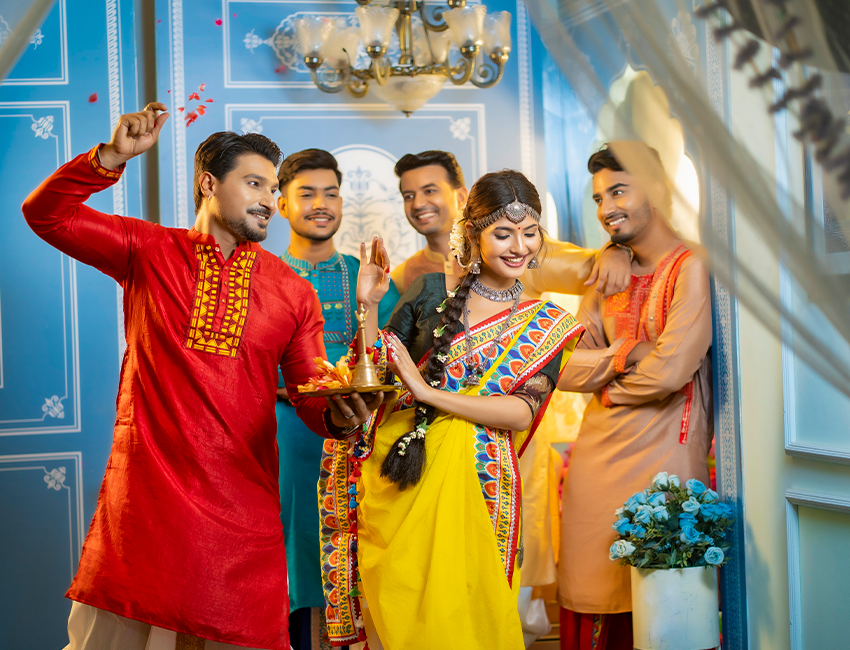
Traditional sarees generally pair naturally with gold jewellery, jhumkas, bangles and other classic Bengali-inspired accessories.
If your saree already has elaborate motifs, embroidery or a statement border, you may not need heavy jewellery.
On the other hand, a simpler saree can give you more freedom to experiment with statement earrings, necklaces or bangles.
A good rule is simple:
If the saree is the statement, keep the jewellery refined.
If the saree is minimal, let the accessories add personality.
8. Choose the Right Draping Style
How you drape a saree can completely change its appearance.
For a traditional Bengali Puja look, the Atpoure style remains an iconic choice. Its distinctive pleats and prominent pallu create a recognisable Bengali silhouette and connect the outfit strongly with cultural tradition.
But you do not have to follow one draping style for every occasion.
A traditional drape can work beautifully for Anjali, Ashtami or Dashami, while a more contemporary drape may be better suited to an evening gathering or a modern festive event.
9. Consider Your Own Personal Style
This might be the most important point of all. Not every woman wants to look traditionally Bengali during Puja—and that is perfectly fine.
Some prefer a classic handloom saree.
Some love elaborate silk.
Some prefer contemporary designer sarees.
Others want something minimal and elegant.
The perfect Puja saree is not necessarily the most traditional saree. It is the one that allows you to celebrate the occasion while still feeling like yourself.
Fashion becomes much more meaningful when tradition and individuality can exist together.
10. Don't Leave Your Puja Shopping Until the Last Moment
This is where practical planning matters.
Popular designs, preferred colours and specific sizes or blouse options can become harder to find as the festival approaches.
Choosing your saree early gives you enough time to:
- Select the right blouse
- Arrange jewellery
- Decide on your draping style
- Plan your footwear and accessories
- Make alterations if necessary
- Try the complete look before Puja
More importantly, early shopping means you can enjoy the festival without worrying about your outfit at the last minute.
The Perfect Puja Saree Is the One That Tells Your Story
There is no single saree that can be called the “perfect” Durga Puja saree.
For one woman, it may be a classic red-and-white saree.
For another, it may be a delicate Jamdani.
Someone else may feel most beautiful in silk, organza or a contemporary designer saree.
What matters is finding the right balance between tradition, comfort, occasion and personal style.
Because during Durga Puja, a saree is more than something you wear.
It becomes part of the memories you create—at Anjali, in the pandal, with family, with friends, and in all those photographs you will look back on years later.
So this Puja, don't simply choose a saree because it looks beautiful.
Choose one that feels like you.
Oliver
Lorem ipsum dolor sit amet consectetur adipisicing elit. Minus adipisci, totam praesentium sint qui doloremque repellendus.